
Introducing the Tomari-te Lineage Historic Site in Afuso, Onna Village:
**“Gravesite of Kosaku Matsumora (Matsumora Family Tomb)”** | Okinawa Dento Karatedo Shinkokai
Onna Village
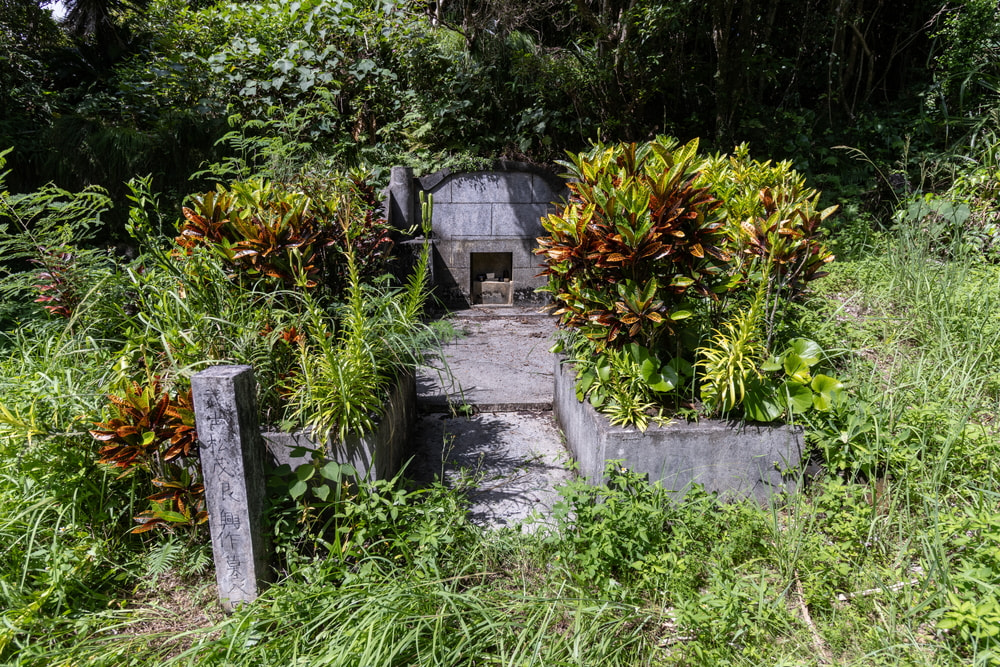
The main thoroughfare of Okinawa tourism, National Route 58. In the resort area of Onna Village’s Afuso—where countless rental cars pass each day—there is a gravesite tucked just off a small side road from the popular driving route. Here rests Matsumora Kosaku, known as “Bushi Matsumora,” the martial artist later revered as the restorer of Tomari-te. The man who never sought honor or rank throughout his life lies quietly in this place.
Kosaku was born in 1829 in Tomari Village, Naha. In this port town, where the winds of foreign cultures constantly blew in, the young Kosaku devoted himself to the practice of “Te,” the precursor to modern karate, while absorbing strong influences from Chinese martial arts. Choosing not to serve the Ryukyu royal government, he lived his entire life as an independent martial artist. What he refined were rare techniques that would later become foundational to many karate styles, including Shorin-ryu, Shorinji-ryu, and Matsubayashi-ryu.
Upon reaching his prime, Kosaku trained younger practitioners around Tomari, helping spread Tomari-te. It is said that not only his skill but also his character drew people to him. One story still told today recounts how Kosaku single-handedly subdued an overbearing samurai of the Satsuma domain through martial skill alone.
His teachings eventually flowed into the hands of figures who would reshape the history of Okinawan karate. Motobu Choki absorbed Tomari-te techniques as part of his foundation, and Itosu Anko is also said to have been influenced by Matsumora’s ideas. Itosu would later introduce karate into the school system, opening an art that had long been confined to the dojo to the broader society. Matsumora’s lineage branched into traditions such as Matsubayashi-ryu, Wado-ryu, and the Motobu line, and it continues to support a living stream of karate practiced in dojos around the world today.
In 1898, Kosaku passed away at the age of 69.
When speaking of the history of Okinawan karate, the name Tomari-te cannot be omitted. That Tomari-te still lives today is because one martial artist devoted himself entirely to preserving both technique and spirit. When you stand before his grave, this unlisted, quiet place conveys that truth with unmistakable clarity.